
'Weapons' is a tantalizing mystery with a great horror villain

I’m not typically scared of horror movies. I enjoy the genre for accessing the dark recesses of the imagination, but they generally don’t keep me up at night. Jump scares sometimes jolt me because I have a working autonomic nervous system, though I’d argue that’s more a function of surprise than it is of fear. So the horror I appreciate the most tends to be built on escalating dread, on filmmaking that successfully establishes and maintains a tone of unease. The best horror, therefore, doesn’t send me flying out of my seat in fright, but rather burrows into my mind and unsettles me with its sinister implications. Weapons, by my estimation, is very good horror. (SPOILERS FOLLOW)
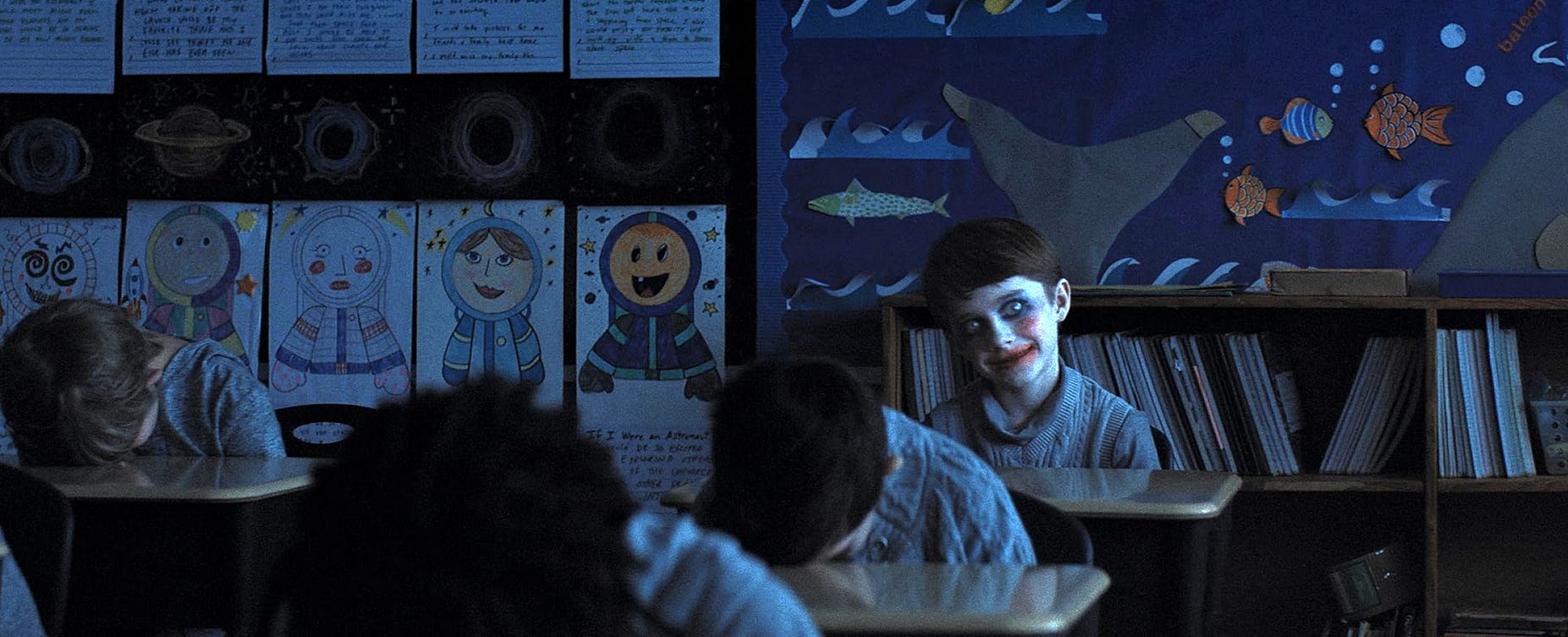
The film begins with a disturbing mystery: at 2:17am one morning, 17 schoolchildren got out of bed and ran out of their houses, disappearing into the dead of night. Why did they leave? Where did they go? Why didn’t they return? And why did they all come from the same teacher’s classroom? Justine Gandy (Julia Garner) is left with just one student, Alex (Cary Christopher), and the two become the center of an extensive investigation that yields no clues, so it’s no surprise that the parents from the community come to blame her for the disappearances. She must know something. Children in peril; a town racked with paranoia; a suburban community full of dark, empty spaces; and a creepy child narrator (Scarlett Sher) who announces upfront that people will die mysteriously. Writer-director Zach Cregger is nothing if not efficient in capturing setting and mood.
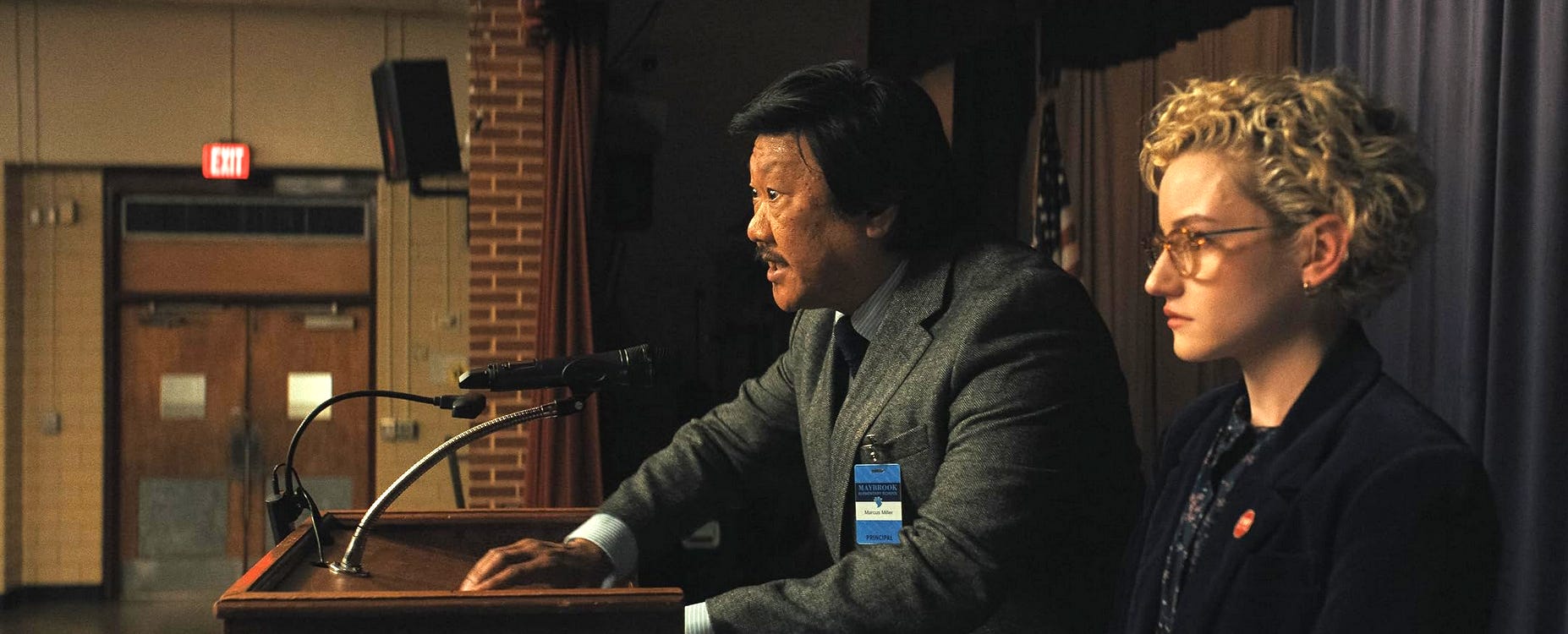
He’s just as effective at establishing character. This is done with a nonlinear story structure that tracks each major character’s point of view, revealing new details as each story intersects. Along with Justine and Alex are local police officer Paul (Alden Ehrenreich), desperate father Archer (Josh Brolin), and homeless drug addict James (Austin Abrams). There’s also Marcus (Benedict Wong), the school principal and the subject of my biggest complaint. You see, Marcus is gay, married to Terry (Clayton Farris), and their fate is especially gruesome in a pretty egregious example of Bury Your Gays, the harmful trope in which queer characters are disproportionately killed off in media. The husbands have an unfortunate run in with the film’s principal villain, who possesses Marcus, forcing him to beat Terry to death before he’s eventually struck by a car and graphically splattered across the road. No straight characters are dispatched with such indignity.
But I’m getting ahead of myself. The layers of the film are peeled back gradually, yielding impactful surprises. Justine’s opening segment is marked by uncertainty, vulnerability, and isolation, depicted through a camera that stalks her from behind at a liquor store, or follows her at night on the nearly empty street outside her house. And she seems small inside her otherwise empty residence. The eerie cinematography by Larkin Seiple often suggests something threatening just out of view. The mysteries here are total; like Justine, we don’t know what’s happening, and there’s a sense of dread as she sticks her nose where it doesn’t belong; I, for one, can watch murders on-screen without flinching, but characters facing social embarrassment or public rebuke or reprimand trigger my second-hand anxiety and I have to watch through my fingers.
At one point, Justine visits Alex’s house against Marcus’s explicit instructions and spies through a gap in the blocked out windows a man and a woman sitting catatonic in the dark. One of the film’s most unsettling moments comes a little later when Justine falls asleep while staking out that house at night. The front door opens. A woman emerges with a weapon. Then Cregger maintains focus on Justine in her car, keeping the strange woman out of sight until we hear her enter the vehicle to cut off a lock of Justine’s hair with a pair of scissors. Here, as throughout the film, Cregger shows an expert command of timing and suspense, letting our anticipation build, controlling what we can and can’t see, what we know and don’t know.
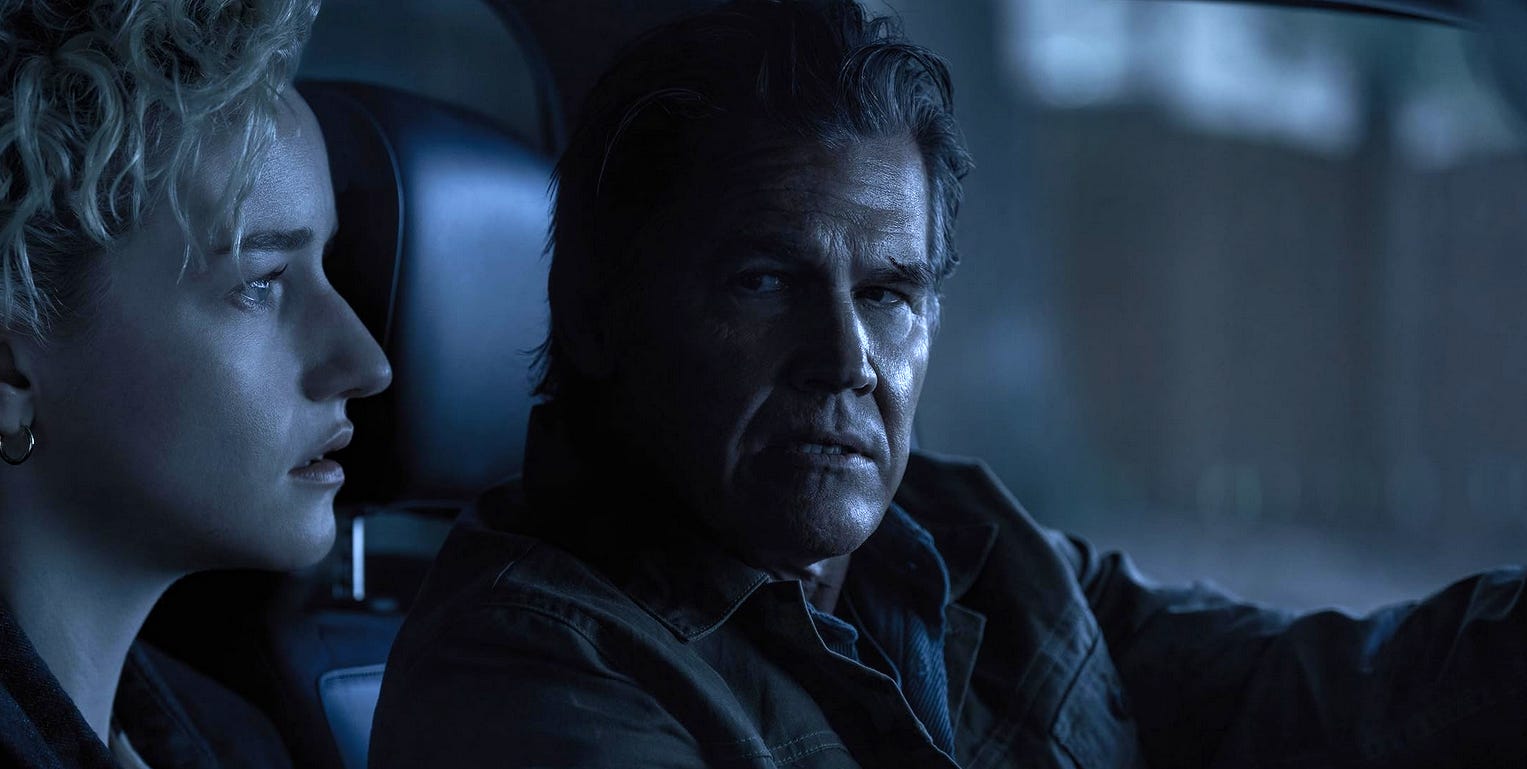
Archer’s segment raises the emotional stakes. His son is one of the missing children, so his investigation achieves a different kind of urgency. In comparison, however, Paul’s subplots don’t add particularly much to the narrative: he’s a recovering alcoholic, he’s married to the police captain’s daughter, and he’s still hung up on his ex, Justine, but these feel like unnecessary detours. It’s actually James who brings the story’s next major shock. To him, Alex’s house looks like a convenient place to rob for items to pawn for drug money, but in the basement he finds the missing children, standing facing the wall in a haunting image that reminded me of The Blair Witch Project — incidentally, one of the few horror movies that actually has kept me up at night.
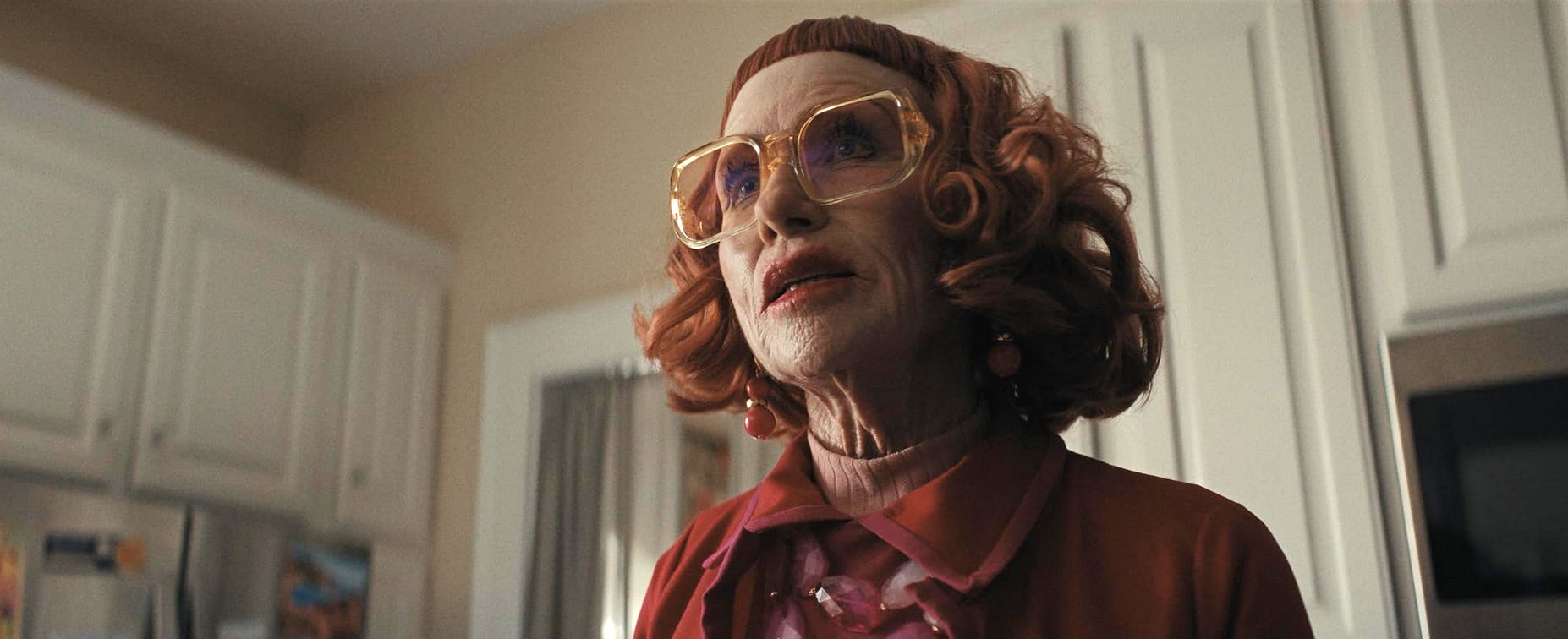
So let’s talk about Aunt Gladys. I avoided most spoilers between the film’s theatrical release and its premiere on HBO Max, where I finally watched it, but I couldn’t avoid learning that she was the villain of the piece. Not that the film is particularly hiding it. The red-haired woman appears to Justine and Archer in terrifying dreams earlier in the film, and when she shows up at Marcus’s office in place of Alex’s parents, it’s clear she’s up to something. It turns out she has come to live with Alex and his parents to recuperate from an unknown ailment. “Family’s important,” Alex’s father tells him when we finally see the events of the film from the child’s perspective. Famous last words. Soon, his parents are in the witch’s thrall and Alex is forced to serve her every whim, which includes helping her Pied Piper the neighborhood’s children.
Cregger doesn’t explain too much about Gladys, her illness, or why or how she is strengthened by controlling the minds of others. That’s a good storytelling choice. After all, we don’t learn too much about the witch who wants to eat Hansel and Gretel either; leaving some details to the imagination is scarier than exposition. But the best choice Cregger makes is casting veteran character actress Amy Madigan in the role. She’s restrained, but commanding, an instantly classic adversary, and a rare Oscar contender from a horror movie. There are talks of a Weapons prequel surrounding Aunt Gladys, which I suppose isn’t surprising. It’s worrisome that every successful IP must be milked dry by creators in the modern era of constant reboots and revivals. Let’s hope Warner Bros. doesn’t ruin her tantalizing mystique with overexposure. A good original idea like Weapons is hard to find.